Best AI Image Generators in 2026: DALL-E, Midjourney, Flux, Gemini and More
Two years ago, "AI image generator" meant Stable Diffusion running on a consumer GPU, producing outputs that were impressive enough to share on Twitter but not quite ready for anything you'd want to frame on a wall.
Today the category has matured into a genuinely competitive market with a dozen serious players. If you've tried to figure out which AI image generator is actually the best, you've probably found that the answer depends enormously on what you want to do with it.
This guide cuts through the noise: what the major models are, what they're genuinely good at, and how to choose between them.
Why There Are So Many AI Image Generators
The explosion in AI image generation tools tracks closely with the underlying research. Most current models are based on diffusion architectures — they learn to generate images by training on enormous datasets of image-text pairs, developing the ability to synthesise new images from text descriptions.
The open-source release of Stable Diffusion in 2022 was a catalyst: it gave researchers, developers, and hobbyists a capable base model to build on. The subsequent three years produced a wave of fine-tuned variants, new architectures, and commercial products layered on top of the base technology.
The result is a landscape where:
- Multiple base architectures compete (Flux, SD3, DALL-E, proprietary models)
- Fine-tuned variants specialise the base models for specific styles or subjects
- Commercial products wrap models in interfaces designed for specific use cases
- API platforms (fal.ai, Replicate, OpenAI API, Google AI Studio) make the models accessible for building products
Understanding this landscape helps explain why "which AI image generator is best" doesn't have a single answer.
The Best AI Image Generators in 2026
DALL-E 3 (OpenAI)
OpenAI's image generation model is integrated directly into ChatGPT and available via the OpenAI API. DALL-E 3's signature strength is prompt adherence — it follows specific, detailed instructions better than most alternatives.
Best for: Compositional images where you need specific elements in specific positions. Works well when you can articulate exactly what you want in words.
Limitations: Character consistency across multiple images is not a strength. Aesthetic is distinctive — clean and slightly clinical. Not easily fine-tuned for specific illustration styles.
Access: Via ChatGPT (consumer) or OpenAI API (developer).
Midjourney
Midjourney has developed the most recognisable aesthetic in AI image generation — a painterly, cinematic quality that's been widely adopted for concept art, book covers, and creative work. It iterates frequently and each version brings noticeable quality improvements.
Best for: Single striking images where aesthetic quality is the priority. Concept art, mood boards, creative exploration.
Limitations: API access is limited, making it harder to build products on. Less suited to production pipelines that need consistent, repeatable outputs. Character consistency across a sequence of images is difficult.
Access: Via the Midjourney Discord or web app. API access is in beta.
Flux (Black Forest Labs)
Flux was released in 2024 by Black Forest Labs — a team with deep roots in the Stable Diffusion project. The Flux family includes several variants: Flux.1 [schnell] (fast), Flux.1 [dev] (research), and Flux.1 [pro] (highest quality via API).
Best for: Illustration work, consistent style application, outputs that need to maintain a specific aesthetic across multiple generations. Performs particularly well on flat-colour illustration styles.
Limitations: Heavier compute requirements than some alternatives. Photorealism is strong but not always the top choice for photo-like outputs where Stable Diffusion's ecosystem has more fine-tuned options.
Access: Via the fal.ai API, Replicate, and other platforms. The fal.ai platform offers both base Flux models and fine-tuned variants built on Flux.
Stable Diffusion 3
The third major generation of the open-source Stable Diffusion architecture from Stability AI. SD3 improved significantly on its predecessors in composition, text rendering, and photorealism.
Best for: Developers who want maximum flexibility and control. The open-source nature means an enormous ecosystem of fine-tuned models, LoRAs, and community-built tools.
Limitations: Getting the best results requires more technical knowledge than plug-and-play commercial tools. Quality out-of-the-box is lower than the best commercial models; quality with the right fine-tuned variant is competitive with anything available.
Access: Open source, available via Stability AI and community repositories. Hosted via Replicate, fal.ai, and other platforms.
Gemini / Imagen (Google)
Google's AI image generation capabilities come via two routes: Gemini (the multimodal model available in Google products) and Imagen (the underlying image generation architecture, accessible via Google Cloud and the Gemini API).
Best for: Integration with Google's ecosystem — Drive, Workspace, Google Cloud infrastructure. Useful when image generation needs to be part of a broader Google-adjacent workflow.
Limitations: Less specialised for illustration or consistent style application compared to Flux. Gemini's image generation is a feature among many rather than a focused product.
Access: Via Google AI Studio, Google Cloud Vertex AI, and integrated into Gemini consumer products.
Adobe Firefly
Adobe's image generation model is notable for being trained on licensed Adobe Stock content and first-party Adobe assets — making it commercially safe in a way that models trained on scraped internet data are not.
Best for: Commercial design work where IP provenance matters. Integrates naturally with Photoshop and the Adobe Creative Suite. Good for product photography, marketing material, and commercial illustration.
Limitations: Aesthetically conservative — excellent at producing professional, polished outputs, less interesting for distinctive or playful styles. Less flexible for creative applications that need a specific non-commercial aesthetic.
Access: Via Adobe Firefly web app and integrated into Adobe Creative Cloud products.
Ideogram
Ideogram developed a strong reputation for one specific capability: text rendering within generated images. Generating an image that includes legible, stylistically consistent text has been a weakness of most models; Ideogram handles it significantly better.
Best for: Designs that need text as part of the image — posters, signs, typographic compositions, anything where words are part of the visual.
Limitations: Less specialised than Flux or Midjourney for character-based illustration work. The text rendering advantage is less relevant for many use cases.
Access: Via the Ideogram web app and API.
Nano Banana and Fine-Tuned Variants
Nano banana is a fine-tuned model variant available on the fal.ai platform, built on a Flux base and specialised for a specific illustration style. It's a good example of an entire category of models: fine-tuned variants that sacrifice general capability for specific, consistent style application.
The naming convention at fal.ai uses memorable names (nano banana, among others) for fine-tuned model variants in the same way that open-source communities name their Stable Diffusion fine-tunes. The names don't describe the underlying architecture — they identify a specific trained variant.
Why fine-tuned variants matter: If you need a model that reliably produces ligne claire comic illustration — or any other specific aesthetic — a general model prompted to "draw in that style" is less consistent than a model that's been fine-tuned on that style directly. Fine-tuned variants are the right tool for style-specific production work.
Access: Via fal.ai's model library. Fine-tuned variants built on open-source bases are also distributed through Hugging Face and Civitai.
Which AI Image Generator Is Best for Your Use Case
A quick decision guide:
| Use case | Recommended model | |----------|------------------| | Single striking image, artistic quality | Midjourney | | Specific compositional prompts | DALL-E 3 | | Consistent style across multiple images | Flux + fine-tuned variant | | Maximum flexibility, developer control | Stable Diffusion 3 | | Commercial-safe images | Adobe Firefly | | Text within images | Ideogram | | Google ecosystem integration | Gemini / Imagen | | Specific illustration style, production quality | Fine-tuned Flux variant (e.g. nano banana) |
The pattern: for single impressive images, Midjourney and DALL-E 3 are strong. For production pipelines that need consistency, Flux and fine-tuned variants are the better choice. For specific illustration styles, fine-tuning a capable base model gives more consistent results than prompting a general one.
AI Image Generation for Personalised Gifts
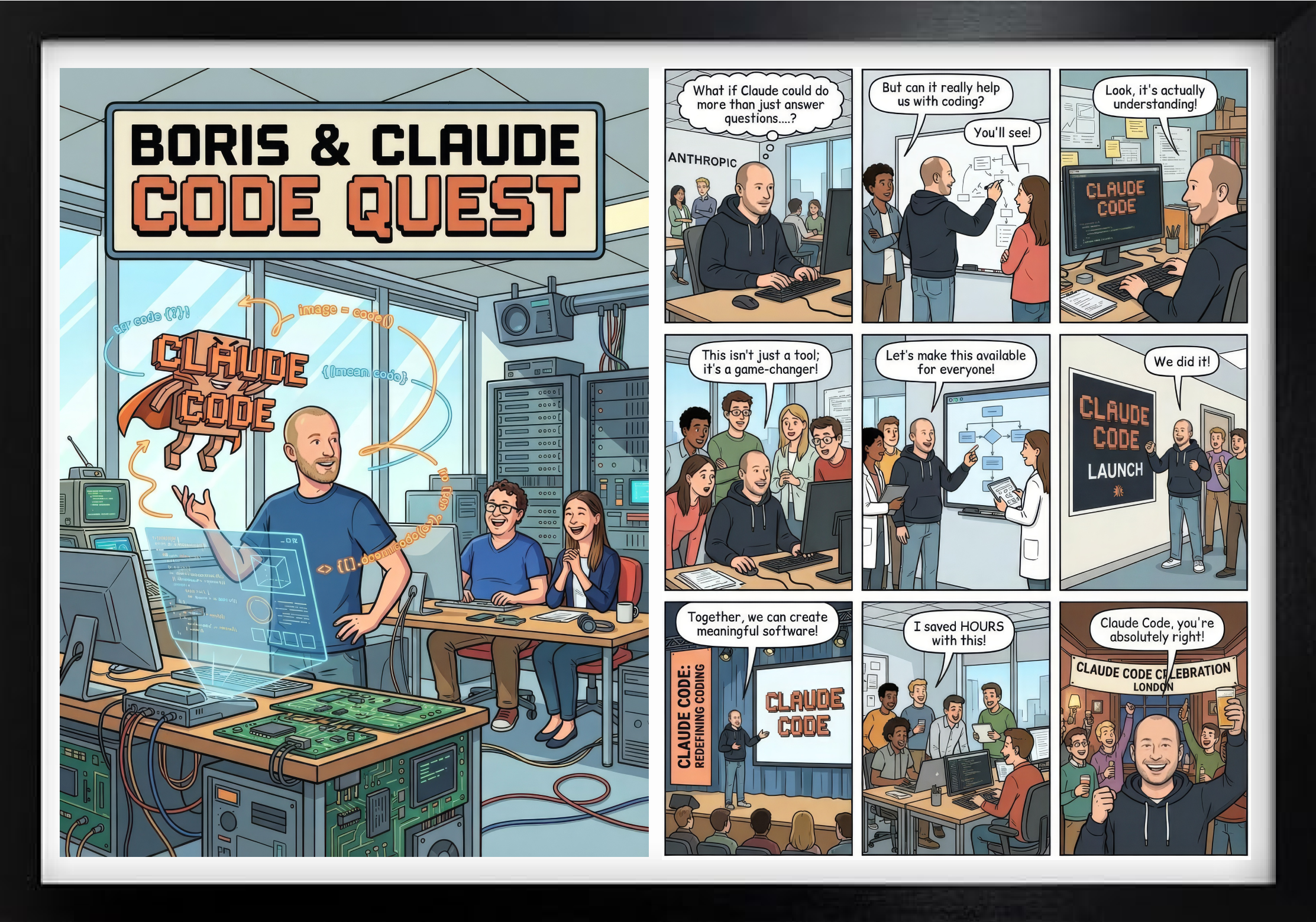
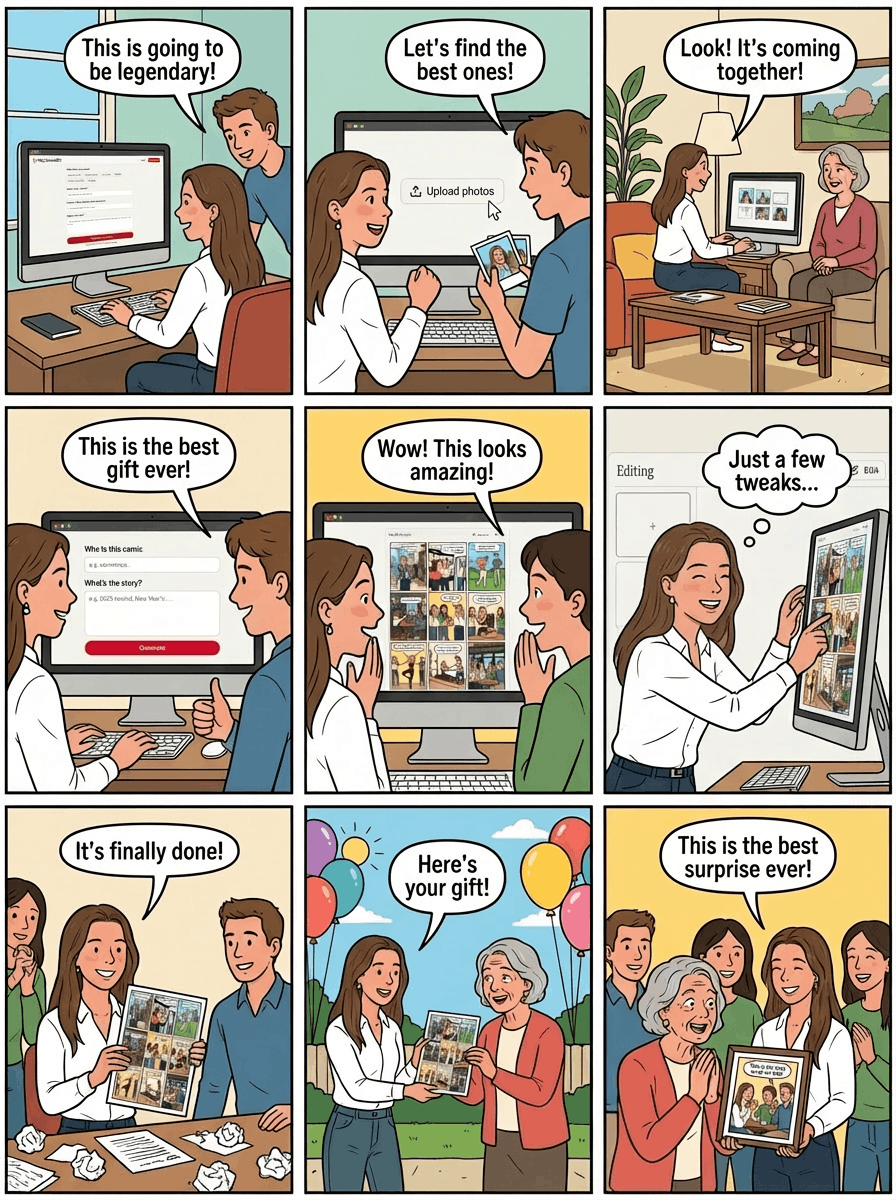
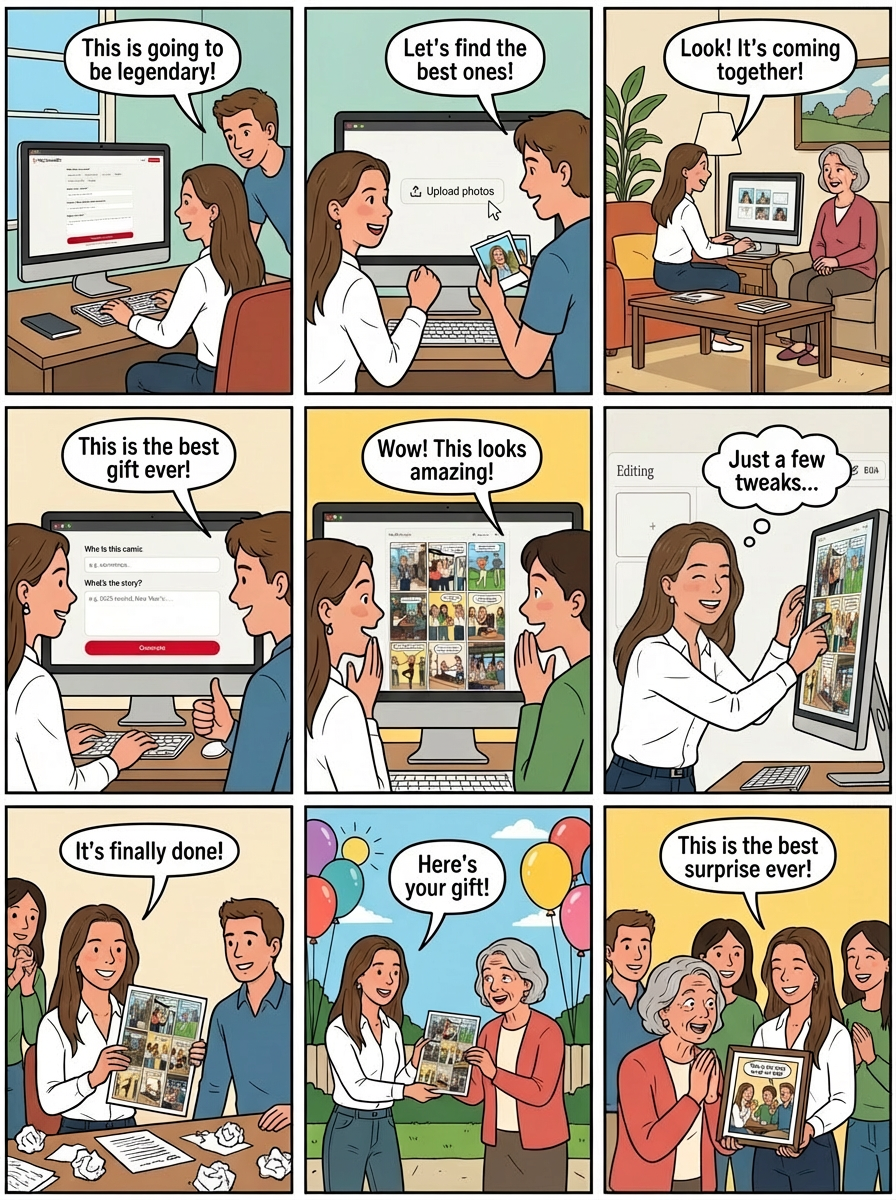
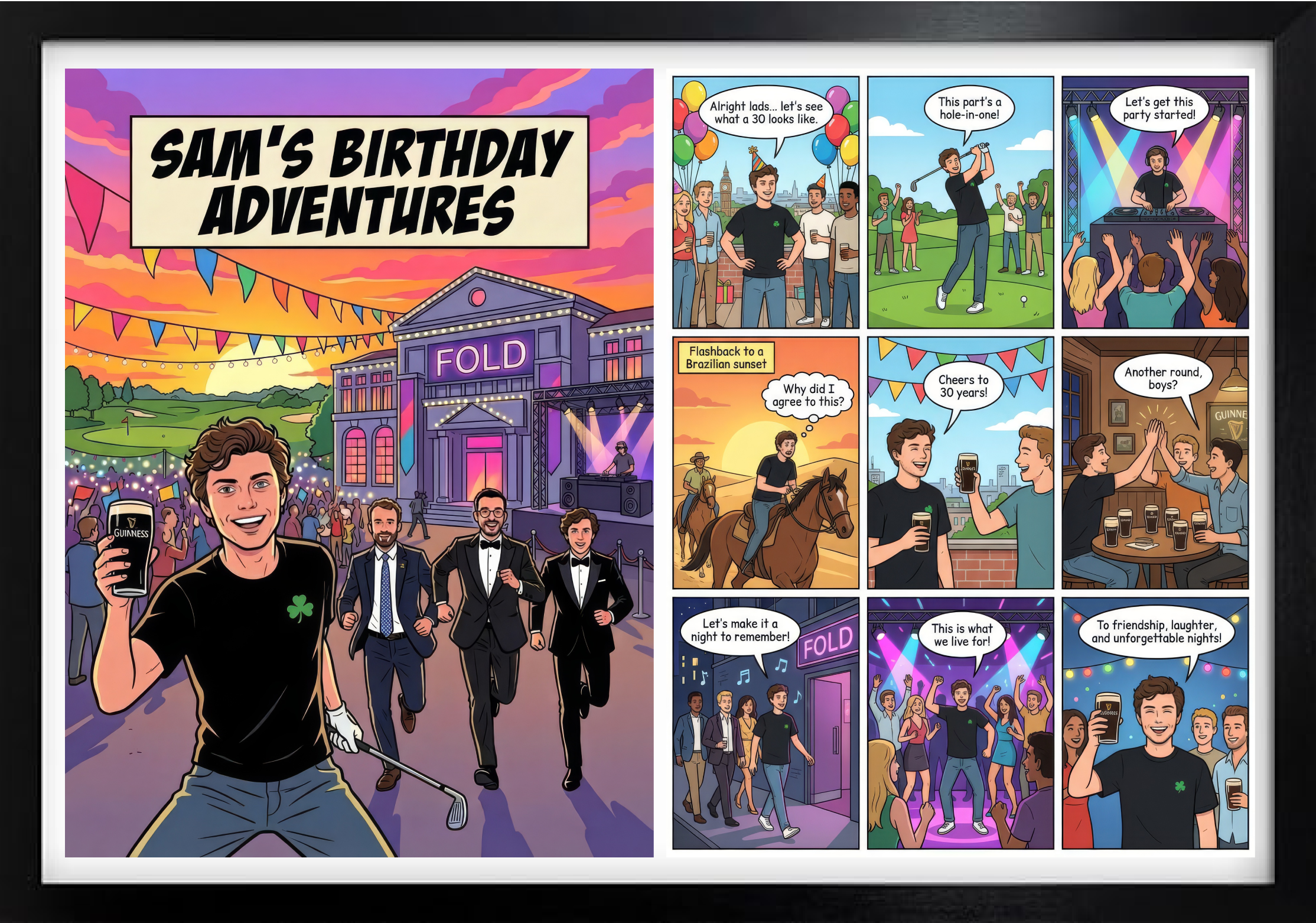
One of the most interesting application areas for AI image generation is personalised gifting — producing a custom illustration of a specific person, in a specific style, that's print-ready and genuinely beautiful.
This use case has specific technical requirements that shape the model choice:
- Character consistency across multiple panels — the same person needs to look like the same person in nine different illustrated scenes
- A specific illustration style — not generic AI art, but a consistent, beautiful aesthetic that works printed and framed
- Photo reference capability — the ability to use an actual photo of the person to establish their appearance in the illustration style
- Print-quality output — resolution and format suitable for A4 or A3 printing
These requirements point toward the fine-tuned Flux ecosystem rather than general-purpose models. The ability to fine-tune on a specific illustration style, combined with Flux's character consistency capabilities, produces results that look like professional illustration rather than generic AI output.
MyComicGift uses this approach: an AI image generation pipeline tuned for the ligne claire / Tintin-inspired illustration style, with character reference from uploaded photos. The result is a full personalised comic — cover and nine-panel storyboard — generated in under two minutes.
If you're exploring AI image generation for the first time, the fastest way to get impressive results is to start with a fine-tuned model for the style you want, rather than trying to prompt a general model toward a specific aesthetic. The fine-tuned model will outperform general prompting nearly every time.
See AI-generated personalised art in action
Create a personalised comic from your story — no technical knowledge needed. First preview is free.
Try it nowFor more on the technology: how AI image generators work for personalised gifts and the nano banana and Flux models explained.