How to Celebrate Company Milestones in a Way People Remember
Every company has moments that feel significant in the room. The funding round that finally closed. The product that shipped after months of work. The hundredth customer, the thousandth user, the first revenue, the first hire. The team that pulled off something everyone said couldn't be done.
Most of these moments pass without proper acknowledgement. A Slack message. A round of applause on an all-hands call. Then back to work.
This is a mistake — not just for morale, but for the company's story. The moments that get marked are the ones that get remembered. The ones that don't are the ones that fade.
Why Most Milestone Celebrations Are Forgotten
The standard milestone celebration has a short half-life. A celebratory dinner is forgotten in weeks. A Slack message is gone in days. A team photo posted on LinkedIn gets 200 likes and disappears from the feed.
None of these are bad. But none of them create a lasting record of what happened and who did it.
The milestones that stay in a company's culture are the ones that have a physical representation: something you can point to, something that lives on a wall, something you show to new joiners.
The Milestones Worth Marking
Not every company moment needs a celebration. The ones that do tend to share a characteristic: they represent something the team achieved together that wouldn't have happened without them.
Funding rounds. Particularly first rounds — the validation that the idea has legs. The team that got you here deserves acknowledgement.
Product launches. Especially first products. The moment a thing that existed only in people's heads becomes real and public.
Customer milestones. First customer, hundredth customer, first enterprise deal. These are the moments that prove the market exists.
Team anniversaries. A founding team's third or fifth anniversary together. The company's own birthday.
Exits and acquisitions. The end of one chapter and the beginning of another.
Difficult achievements. The sprint that everyone doubted. The feature that shipped on time despite everything. The quarter that turned around.
How to Celebrate Company Milestones
Create a Physical Artefact
A physical object that represents the milestone becomes a permanent part of the company's environment. It sits on a shelf, hangs on a wall, lives on a desk. New joiners ask about it. It tells the story without anyone having to narrate it.
The best milestone artefacts are specific to what happened: not just branded merchandise, but something that references the actual achievement.
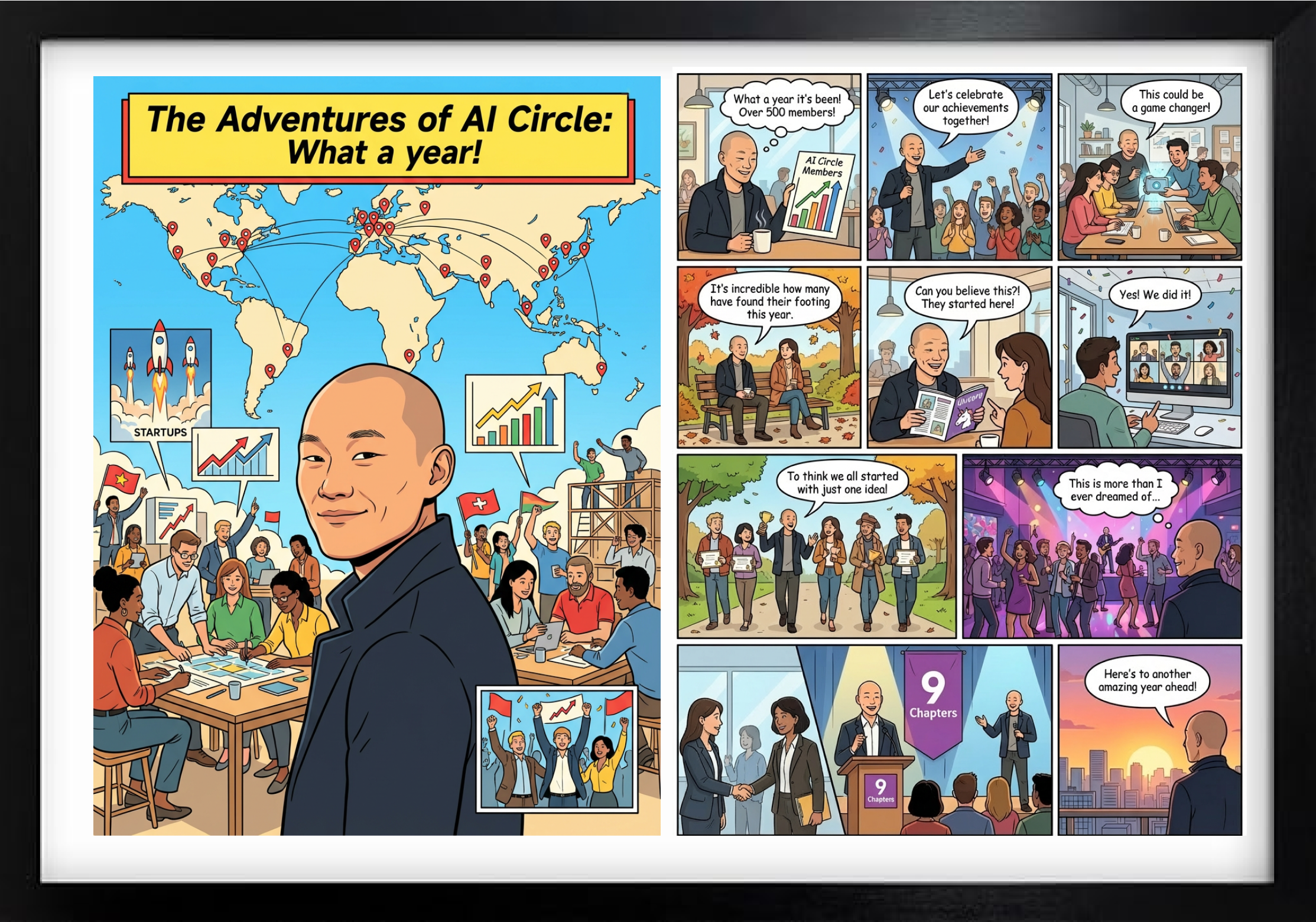
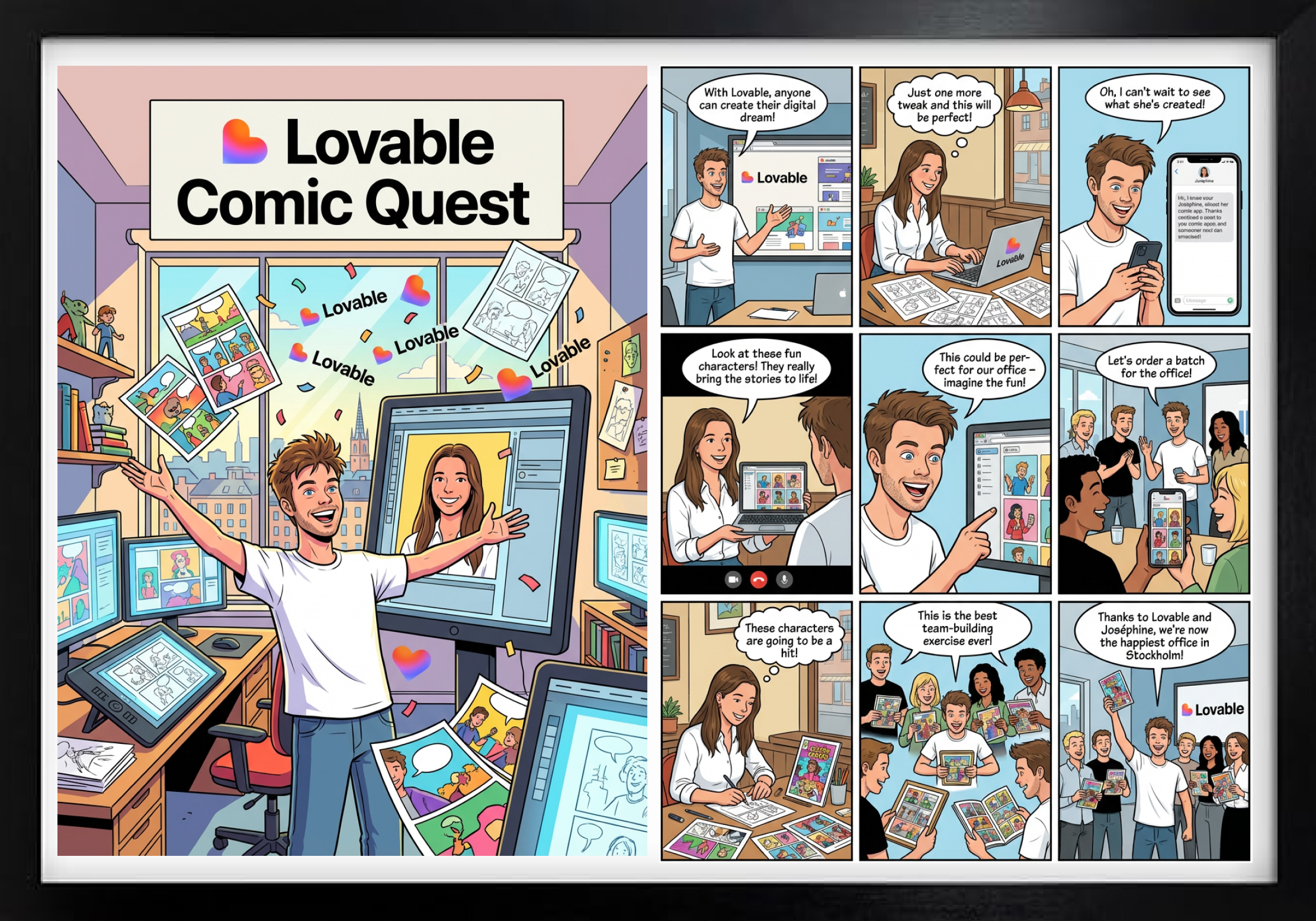
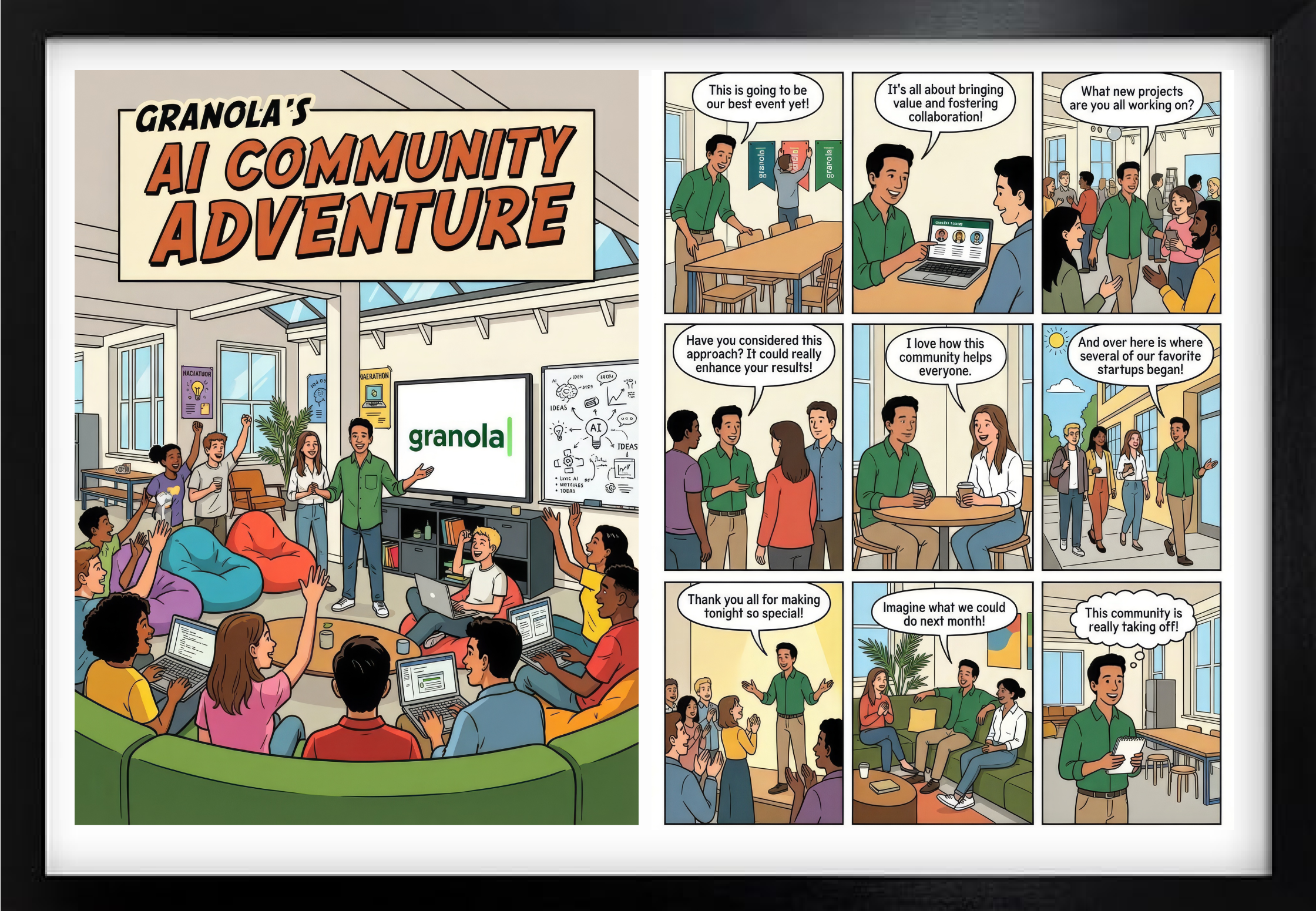
A custom team comic is one of the most effective formats for this. It tells the story of the milestone — the team, the challenge, the achievement — in an illustrated format that's visually compelling and immediately understandable.
Mark It Publicly
Milestones have an external audience as well as an internal one. Sharing the achievement publicly — on LinkedIn, in a press release, on the company blog — creates a record and signals momentum to potential customers, investors, and recruits.
The most effective public milestone posts have something visual and specific: a real number, a human story, something that communicates what was actually achieved rather than a generic "we're thrilled to announce" statement.
Give Something to the Team
The people who made the milestone happen deserve acknowledgement that goes beyond a mention on a call. A physical gift — something they can keep, something that references what was achieved — communicates that you noticed and that it mattered.
Personalised gifts work better than identical bulk gifts here. Even a small element of personalisation — a name, a role, a detail specific to their contribution — signals that the gift was chosen for them rather than ordered in bulk.
Document the Story
Write down what happened. Not the sanitised version for the investor update, but the actual story: the problem, the approach, the people involved, the moments of doubt, the breakthrough. This becomes invaluable — for onboarding, for culture-building, for understanding why decisions were made.
The best company stories are told in narrative form: not a timeline or a bullet-point list, but a story with characters and arc and meaning. A comic is one of the most compressed and memorable ways to tell this kind of story.
The Comic as Milestone Artefact
A custom company comic has several things working in its favour as a milestone artefact.
It's visual — you understand it immediately without reading anything.
It's narrative — it tells a story, which means it has characters (the team), a challenge (what you were trying to achieve), and a resolution (the milestone itself).
It's shareable — in a way that a framed photo or a plaque is not. A comic posted on LinkedIn generates engagement. It's the kind of thing people screenshot and share.
It's human — it features the actual people involved, illustrated in a style that's warm and distinctive rather than corporate.
Real Examples From Real Companies
Several well-known companies have commissioned comics through MyComicGift to mark significant moments.
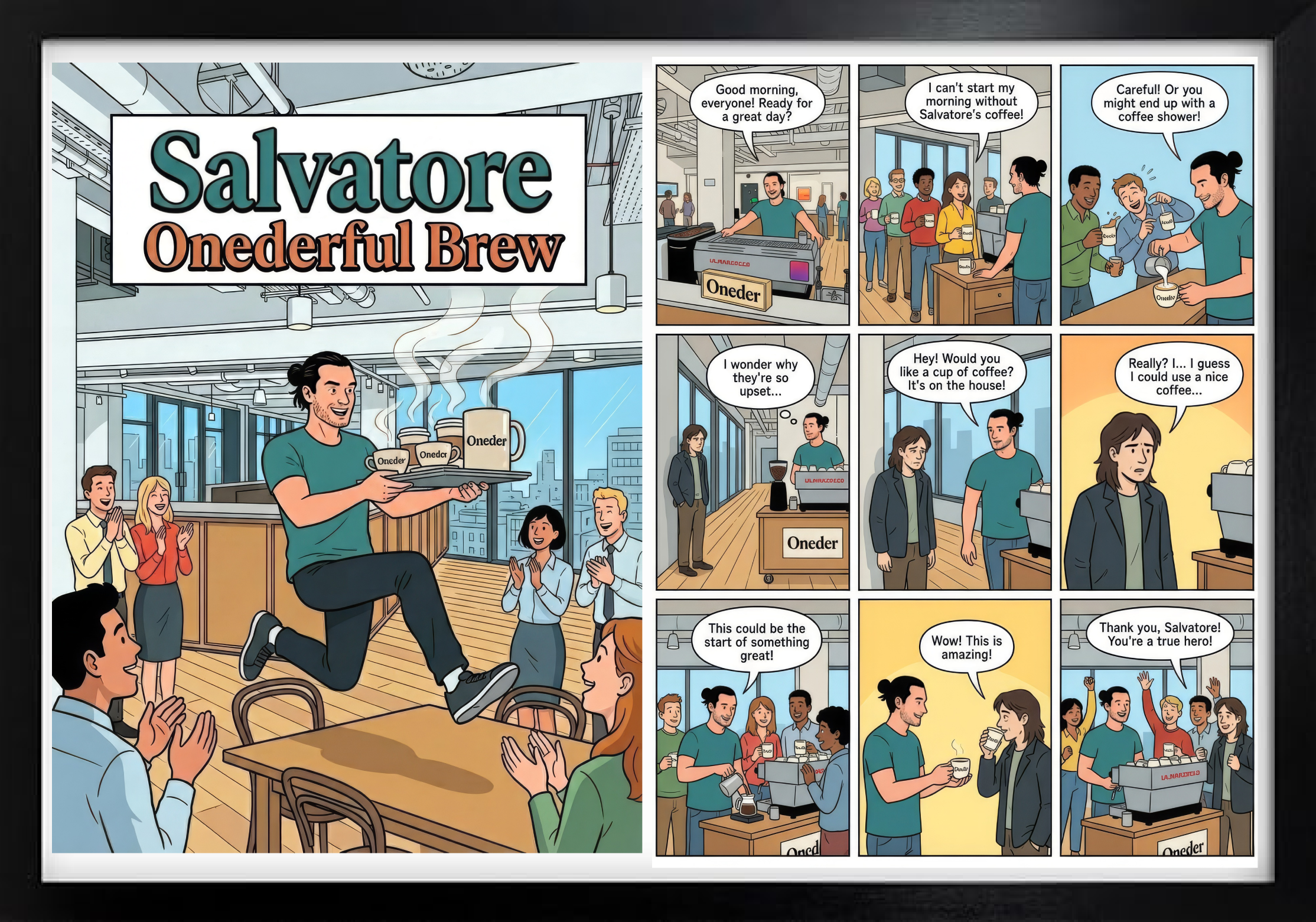
The pattern in successful company comics:
- The team as characters. The founding team, the core team, the people who made it happen — illustrated and named, with their personalities visible in how they're drawn and how they act in the story.
- A recognisable challenge. The specific problem the company exists to solve, or the specific challenge the milestone represents, as the central tension of the story.
- A specific setting. The office, the city, the industry — something that roots the story in the actual context of the company.
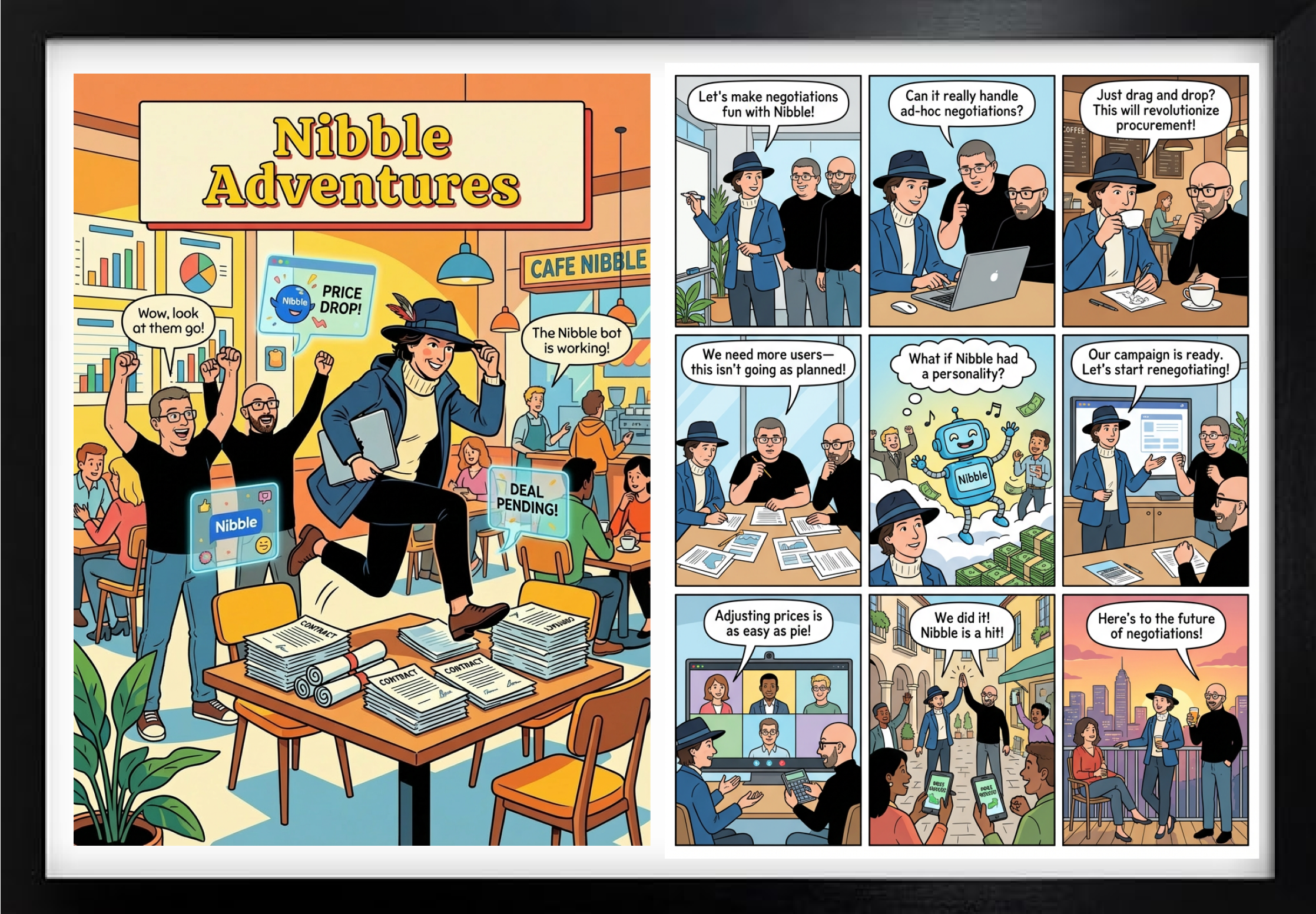
For company comics, the most effective story brief describes: who the key characters are (names, roles, one personality trait each), what the company does in one sentence, and what the milestone represents. Keep it specific and the AI generates something that actually looks like your company, not a generic startup story.
Commemorate your milestone with a custom comic
Tell your company's story in comic form. Used by teams at Anthropic, Lovable, Granola, and more.
Create your company comicAlso see: creative corporate gift ideas and using comics for company storytelling.