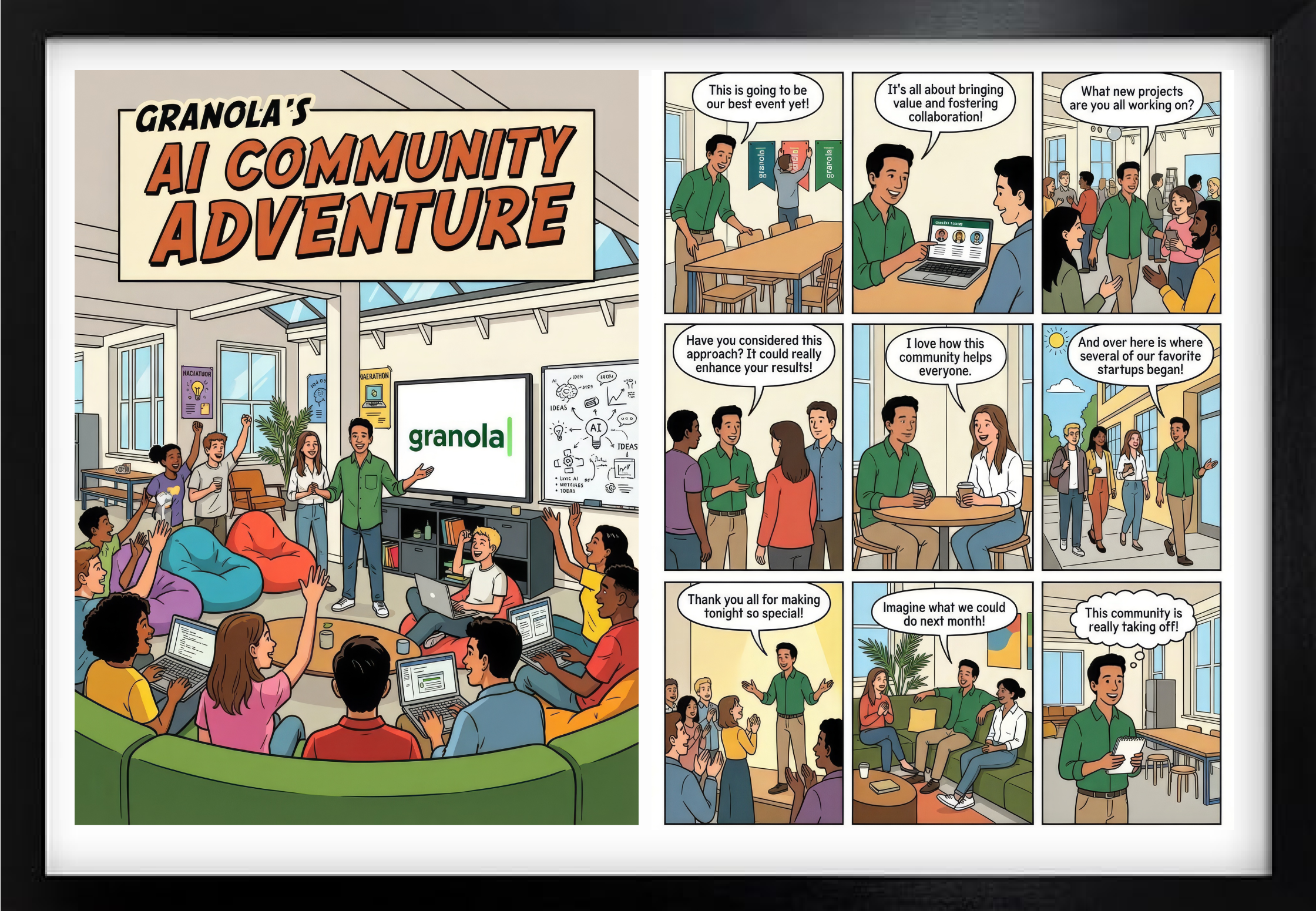
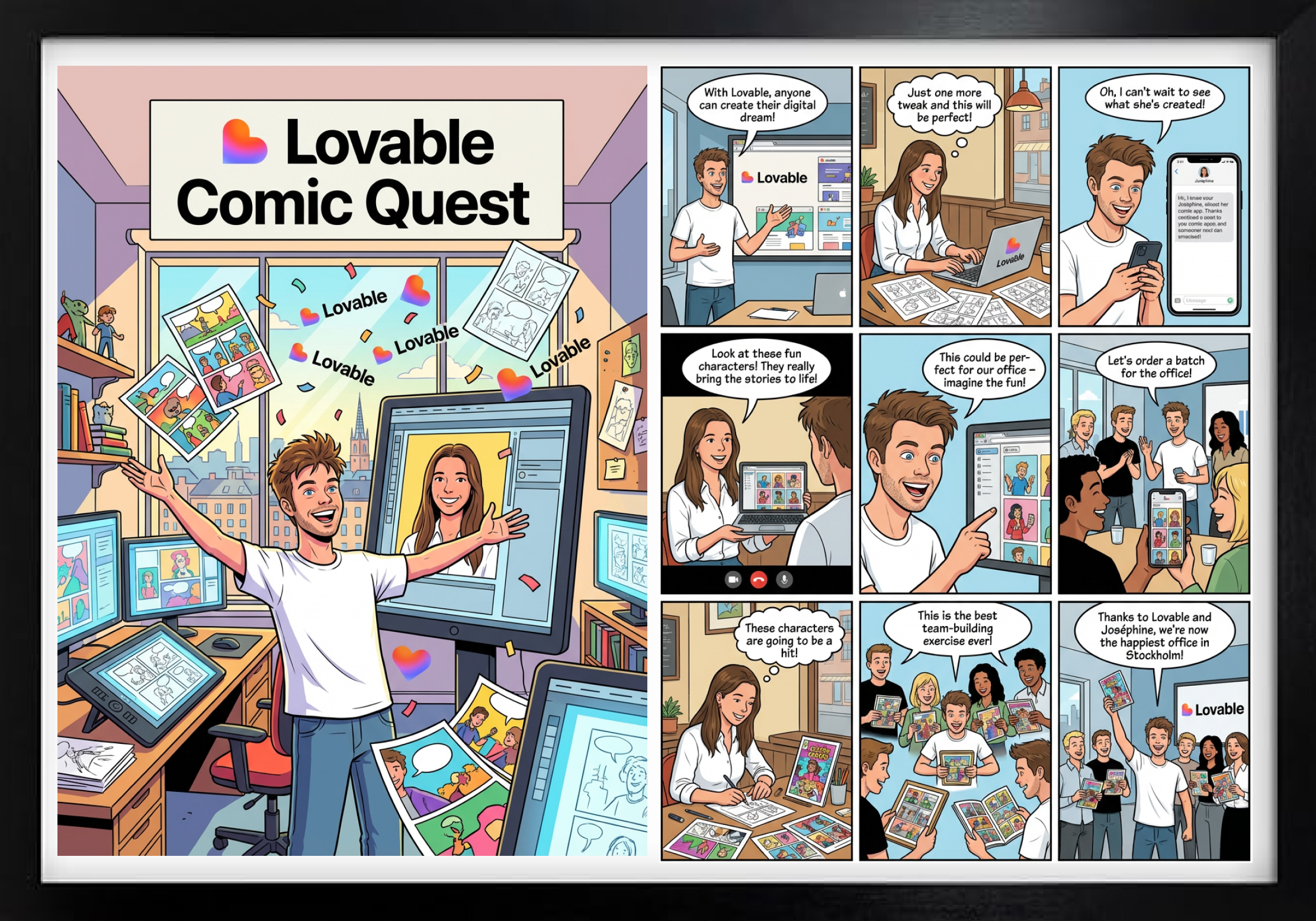
Quarterly Update, But Make It Visual: Comics for Company Storytelling
Nobody reads the quarterly update.
Not because they don't care — most employees do care about how the company is doing. They don't read it because the format is wrong. A wall of text describing metrics, initiatives, and priorities looks like homework. People scroll past it, skim the first paragraph, or save it to read later (they won't read it later).
The companies that solve this problem don't use better writing. They use different formats.
The Internal Comms Problem
The fundamental challenge of internal communication is attention. Every message competes with every other message, the endless stream of Slack notifications, the actual work people are trying to do.
The format of most internal updates works against them. Bullet points signal "summary of information." Long paragraphs signal "effort required." Both trigger the mental shortcut of "I'll read this later."
Visual formats change this calculation. An image stops the scroll. A comic — with its combination of illustration and narrative structure — creates the expectation of something interesting rather than something arduous.
The companies that are getting internal comms right are the ones treating their updates as stories to tell, not information to convey.
Why Visual Storytelling Works
The cognitive science here is well-established: humans are narrative animals. We process stories differently from data. Stories engage memory, emotion, and meaning-making in ways that bullet points don't.
Visual storytelling adds another layer: the illustration does interpretive work that text can't. An expression on a character's face, a setting that evokes a time and place, a sequence of panels that implies causality and consequence — these communicate things that require many more words to achieve in text.
Comics specifically have a remarkable property: they compress narrative. A nine-panel storyboard can tell a story that would take pages to write, and communicate it in seconds. This is why comics work well for company storytelling — they're efficient with attention, which is the scarcest resource in any organisation.
How Companies Use Comics for Storytelling
The Quarterly Update Comic
Instead of a written summary of Q3 results, a comic that tells the story of the quarter: the challenges the team faced, the wins they achieved, the moments that defined it.
The comic isn't a replacement for detailed data (which can still be shared separately) — it's the narrative layer that gives the data meaning. "Revenue grew 40%" is information. A comic panel showing the team's response to a breakthrough moment is a story.
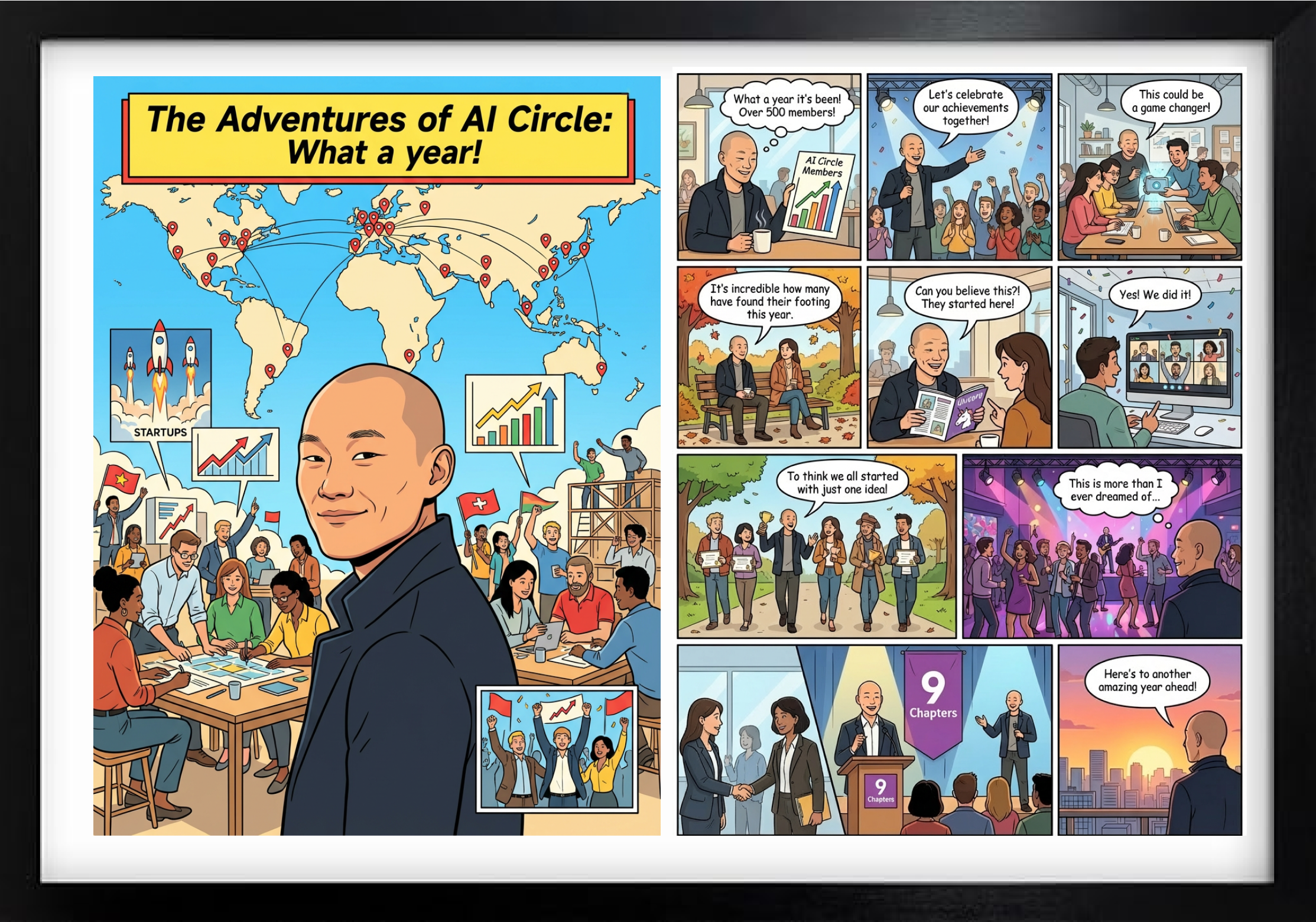
The quarterly update comic works especially well for all-hands meetings and Slack announcements. It's visual enough to stop the scroll and short enough to consume in a minute.
The Company Origin Comic
Every company has a founding story. Most of those stories never get told properly — the founder mentions it in an early blog post, it appears in a "about us" page that nobody reads, it surfaces occasionally in pitch decks.
An origin story comic tells this story in a format people will actually engage with. It becomes an artefact of the company's identity: something new employees receive as part of onboarding, something displayed in the office, something that communicates culture without requiring anyone to narrate it.
The Product Launch Comic
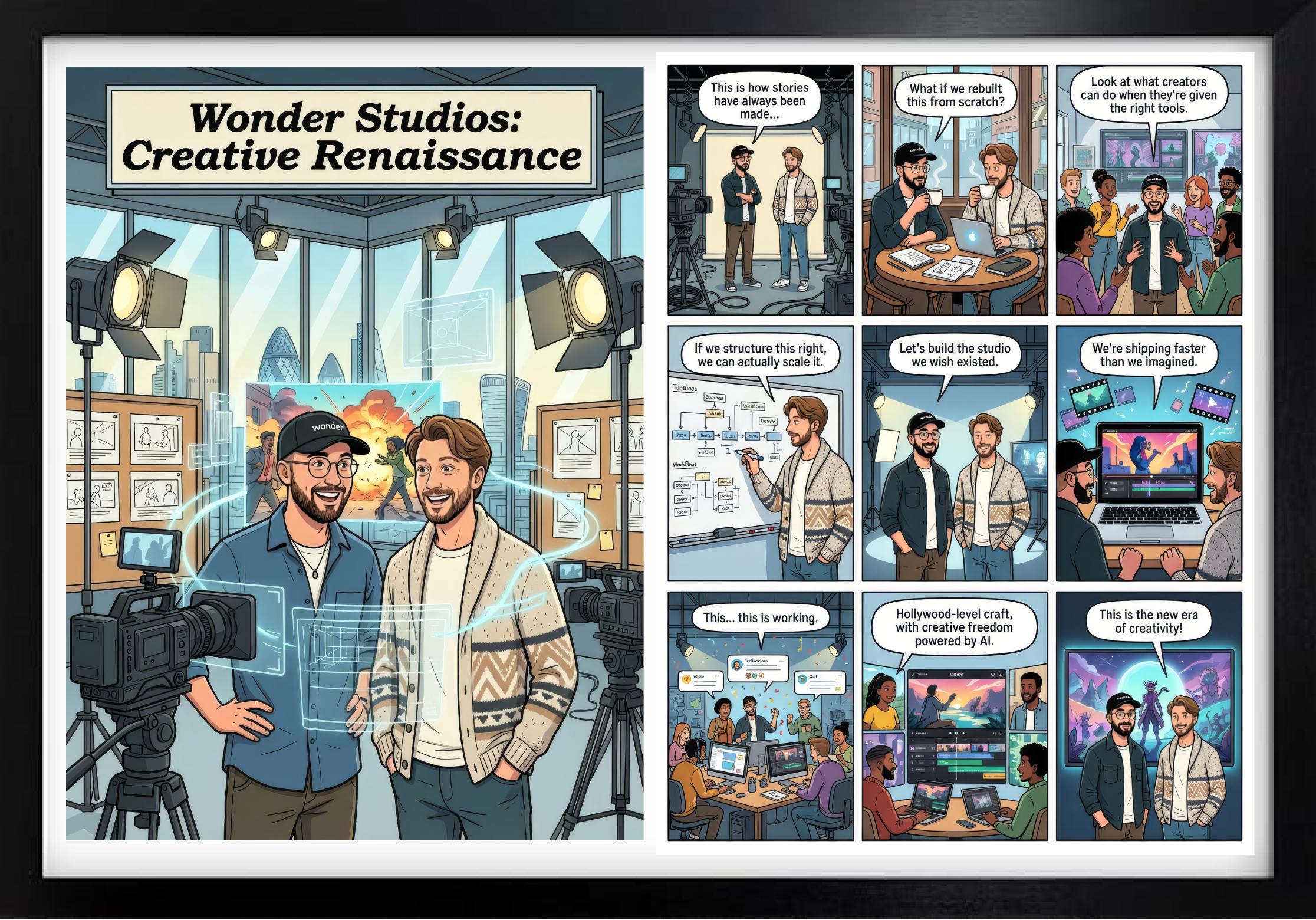
A product launch comic tells the story of why the product was built, who it's for, and what makes it different. It's a piece of marketing that doesn't look like marketing — it looks like a story.
The most effective product launch comics focus on the problem and the people solving it rather than the features. "Here's a team that cared deeply about this problem and built something to fix it" is a more compelling narrative than a feature list, and it's what the comic format naturally produces.
The Team Introduction Comic
A new team member, a new department, a new leadership hire — introduced through a comic that tells their story rather than a standard "please join me in welcoming" announcement.
The comic format is particularly good at communicating personality. A few panels showing how someone responds to a challenge, what they care about, how they interact with their team — communicates culture fit in a way a bio never can.
How to Brief a Company Comic
The most important element of a company comic brief is specificity. Generic company stories produce generic comics. The goal is a comic that could only be about your company.
What to include in the brief:
- The key characters — the people who appear in the story, with names, roles, and one personality trait each. "Maria — product lead, always has a whiteboard nearby, turns problems into diagrams." "Tom — the engineer who insists on reading every line of the PR."
- The company context — what you do, in one sentence, as if explaining to an intelligent friend outside the industry
- The story — what happened, what the challenge was, what the outcome was. Be specific about the events, not just the results.
- The setting — where the story takes place. An office, a specific city, a particular context. The illustration is richer when the setting is real.
Company comics work best when they're honest about the challenges, not just celebratory. A story about a team that struggled, adapted, and succeeded is more compelling — and more believable — than a story about a team that won effortlessly.
Tell your company's story in comic form
Updates, origin stories, product launches, team introductions. Used by teams across the startup ecosystem.
Create your company comicAlso see: how to celebrate company milestones and creative corporate gift ideas.