Why Personalised Gifts Are More Popular Than Ever
The personalised gifts market is projected to grow from $31.5 billion in 2022 to over $42 billion by 2029 — an increase of more than $10 billion in seven years (Grand View Research, 2023). In a broadly mature retail category, this kind of sustained growth is unusual.
Something meaningful is shifting in how people think about giving gifts.
The Numbers
The growth figures are striking not just in absolute terms but because of where the growth is concentrated: not in mass-market gifting, but in the premium segment of personalised products. People are spending more on gifts that are made for a specific person, not less.
The UK personalised gifts market is growing at roughly 9% annually. The US market is larger and growing at a similar rate. E-commerce has been the accelerant: what once required a custom order from a local craftsperson can now be done in minutes, often with AI assistance.
The category includes everything from engraved jewellery to custom illustrations to personalised food and drink to — increasingly — AI-generated personalised art and comics.
What's Driving the Trend
The Death of the Generic Gift
The rise of e-commerce has made it trivially easy to buy anything. The result is that "things" have lost much of their gift value. When someone can order whatever they want next-day from Amazon, receiving something they could have ordered themselves doesn't feel like a gift — it feels like a purchase made on their behalf.
The response to this has been a shift toward gifts that can't be easily self-purchased: experiences, services, and personalised items that have the recipient's specific story built into them. A personalised gift communicates something a generic purchase cannot: I thought about you.
The Experience Economy and Gifting
The broader shift toward valuing experiences over objects — well-documented in consumer behaviour research since at least 2010 — has influenced gifting. People increasingly want gifts that feel like an event or a story, not just a thing.
Personalised gifts occupy an interesting middle ground: they're objects, but they're objects that tell a story. A personalised comic isn't just a print — it's a narrative about the recipient. An engraved watch isn't just a watch — it's a record of a relationship and a moment in time.
AI Is Making Personalisation Scalable
Historically, truly personalised gifts were expensive and slow. A custom illustration took weeks to commission and hundreds of pounds to afford. A personalised book required professional design skills. Most "personalised" products were templated: a name dropped into a pre-existing design.
AI image generation has changed this fundamentally. A genuinely custom illustration — specific to a person's face, personality, and story — can now be generated in 60 seconds for a fraction of the cost of a commissioned illustration. The quality has reached a point where the outputs are genuinely impressive rather than obviously algorithmic.
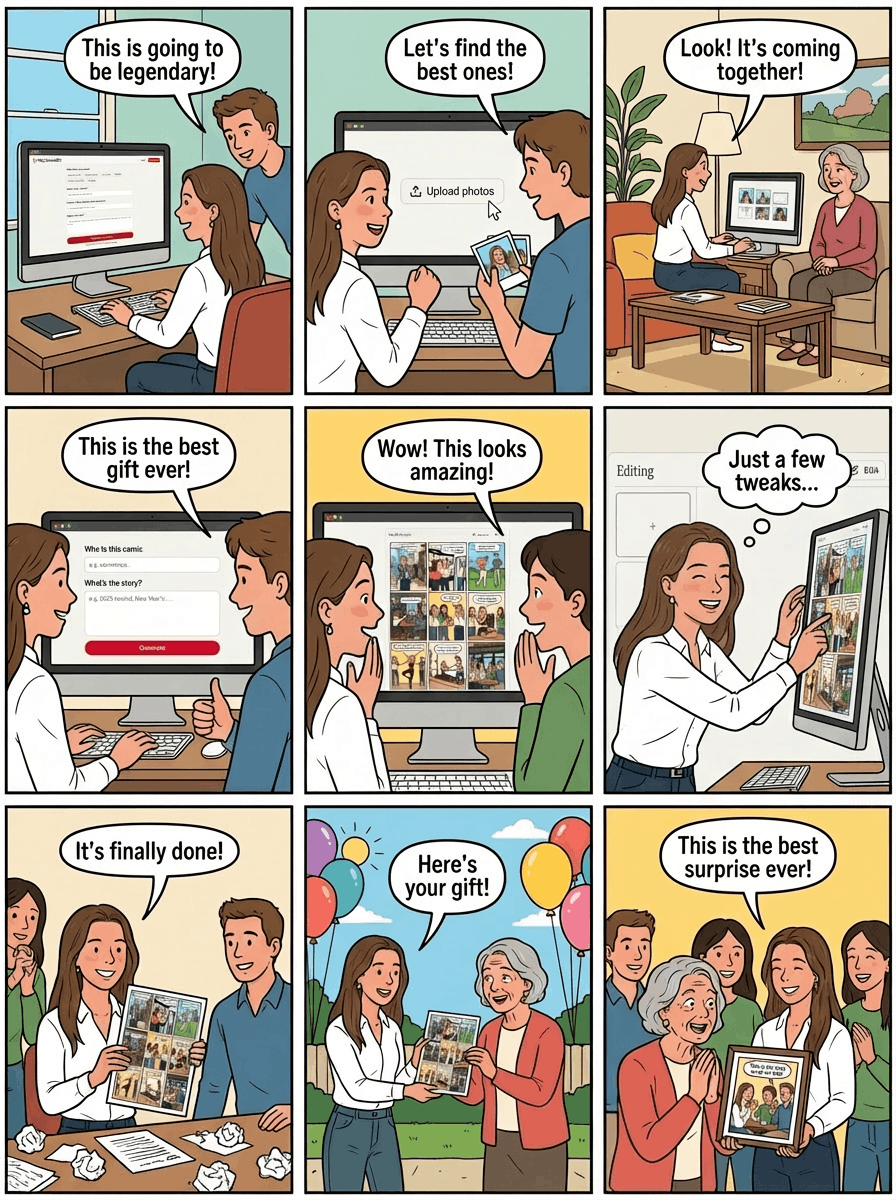
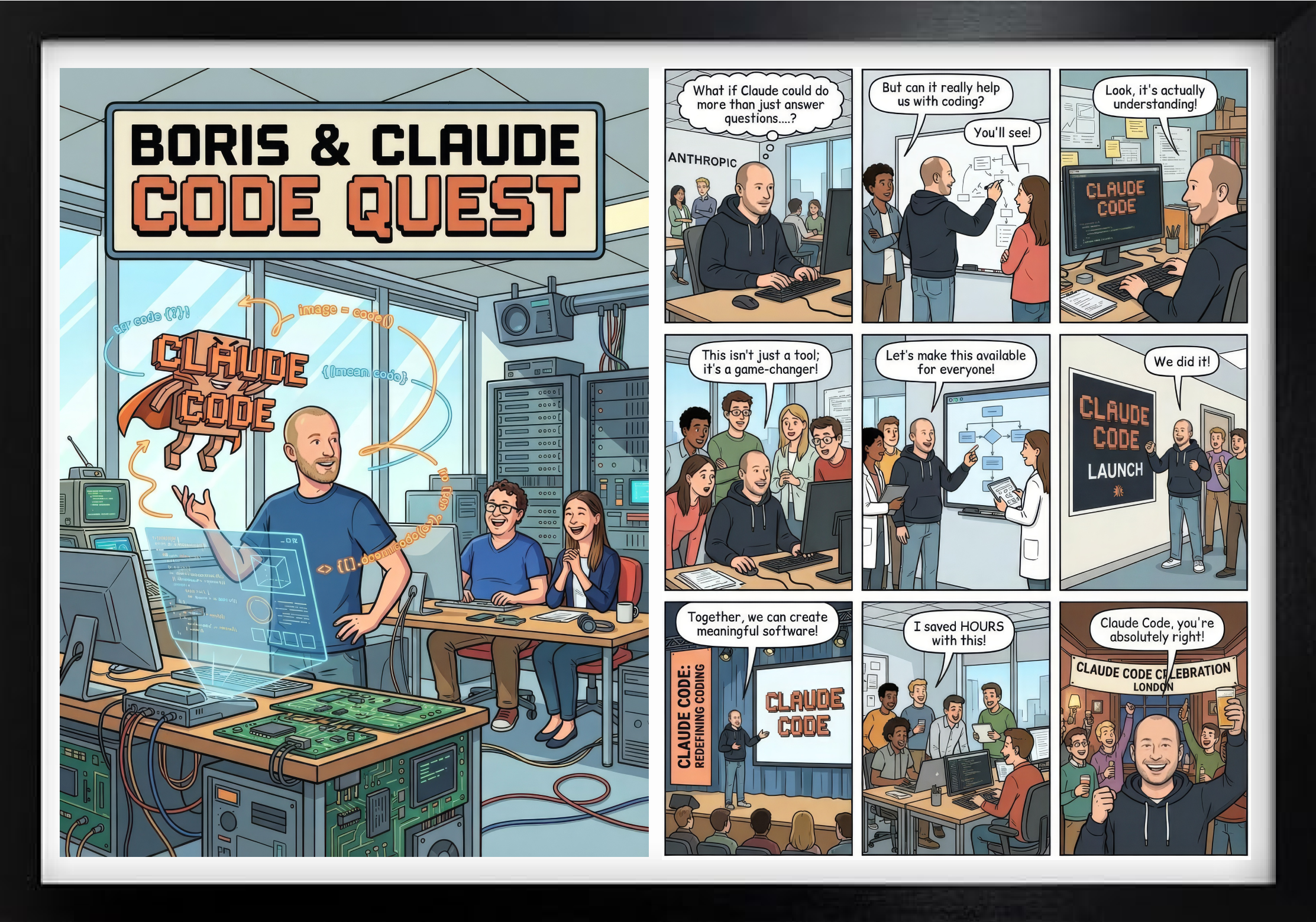
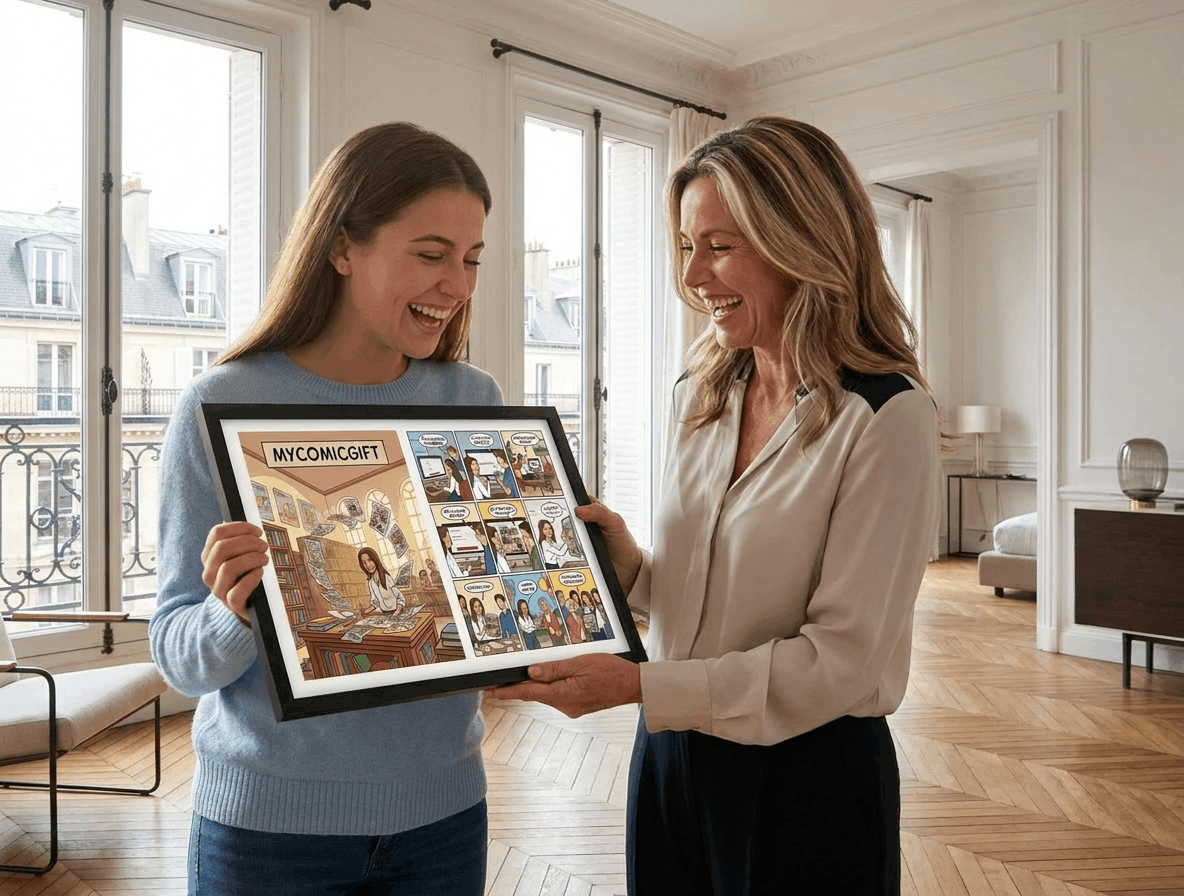
This has created a new category of gift that didn't exist five years ago: personalised art that's truly bespoke, affordable, and fast. MyComicGift is an example of this category — a fully illustrated personalised comic cover and storyboard, generated from a text brief, delivered in minutes.
Social Sharing and the Giftable Moment
Gifts that are visually striking and photographable are more valuable in a social media age than gifts that aren't. A personalised comic generates genuine social sharing — people post it, show it, talk about it. The gift has a life beyond the moment of receiving.
This creates a network effect for personalised gifts that generic gifts lack: the recipient becomes an advocate, and the gift reaches an audience beyond the two people involved in the exchange.
What Makes a Personalised Gift Genuinely Personal
Not all personalised gifts are equally personal. There's a spectrum:
Templated personalisation — a name printed on a pre-existing design. Technically personalised. Minimally thoughtful.
Occasion personalisation — a gift that acknowledges the occasion without referencing the specific person. A "Happy 40th Birthday" banner is personalised for the occasion, not the individual.
Name personalisation — a product with the recipient's name on it. One step up. Still not specific to who they actually are.
Story personalisation — a gift that references something specific about the recipient: their history, their personality, their relationships, their defining experiences. This is where genuine personalisation begins.
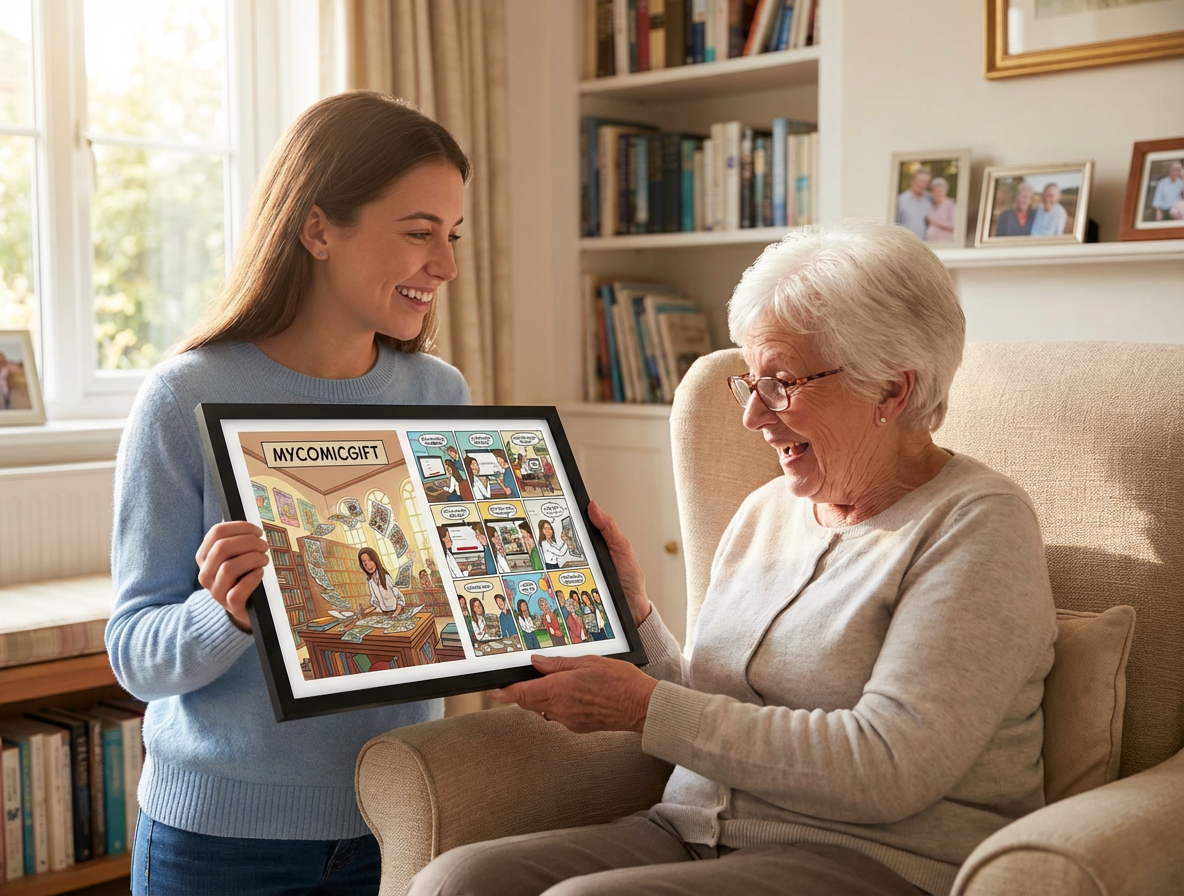
Narrative personalisation — the highest form: a gift that doesn't just reference the person but tells a story about them. This is the category that personalised comics occupy.
Research consistently shows that recipients value the thought behind a gift more than its monetary cost — a finding replicated across gift-giving studies including Baskin et al. (2014) in the Journal of Experimental Psychology. A $50 gift that required genuine thought and knowledge of the person beats a $200 gift chosen at random. Personalisation is how you demonstrate that thought.
Where the Category Is Going
Several trends are worth watching:
AI-generated personalised art will become a significant part of the market over the next five years. The technology is good enough now for premium outcomes, and the cost and speed advantages over human-commissioned art are substantial.
Mass personalisation — the ability to create genuinely unique products at scale — will blur the line between custom and mass-market gifts. The infrastructure for this is being built now.
Experiential personalisation — gifts that are personalised experiences rather than personalised objects — will continue to grow, particularly for premium occasions.
Cross-format personalisation — a single story told across multiple formats: a digital download, a physical print, a shareable social post — is already emerging and will become more common.
The common thread across all of these: gifts that are specific to a person, rather than selected from a catalogue of generic options, are becoming the new standard expectation for meaningful occasions.
See what personalised comics look like
Browse real examples in the gallery, or create your own in minutes.
Explore the galleryFor more on the technology: read how AI image generators are changing gifting and AI-powered gifts.